
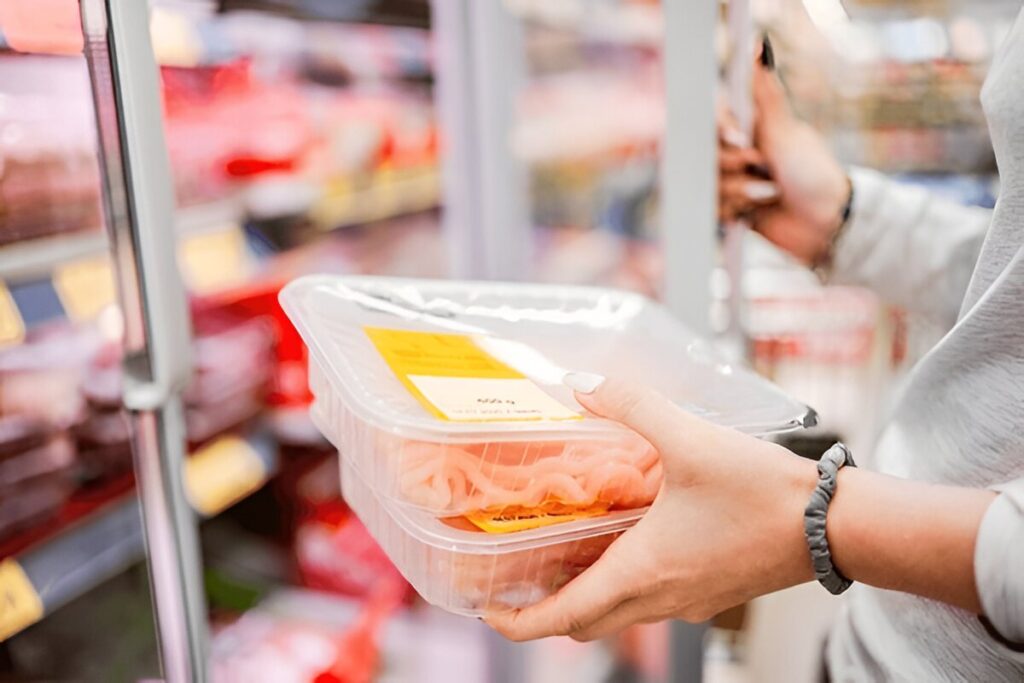
The world’s craving convenience, and e-commerce is delivering — literally. The online food delivery boom is undeniable: Zomato’s orders jumped 53% to Rs 15,455 crore in Q1 FY25, while Swiggy’s Instamart grew 101% to Rs 4,670 crore in Q4 FY25. Globally, this market is headed toward USD 477.64 billion by 2027. Behind every fresh delivery? PET containers — clear, sturdy, and increasingly made from recycled material — keeping produce, deli foods, and meal kits fresh, safe, and green.
PET (Polyethylene Terephthalate) containers are lightweight, durable, and crystal-clear — perfect for showing off vibrant salads or neatly packed deli meals. Their recycled form, rPET, made from post-consumer plastic bottles, is rapidly taking centre stage across the food packaging industry.
The global rPET market reached USD 12.1 billion in 2024 and continues to grow at 8.1% annually. Consumer awareness is reshaping purchasing habits — 74% of shoppers now actively factor in sustainable packaging when choosing brands. Fresh produce like leafy greens and berries drives much of this demand, with the global salad market valued at USD 12.03 billion. Deli foods are following closely, set to reach USD 298.3 billion by 2027. Retail-ready meal kits round it all out as a fast-growing category that relies on PET’s combination of visibility and protection.
Governments worldwide are tightening the rules on packaging. India’s Plastic Waste Management Rules require 30% recycled plastic content by April 2025, scaling to 60% by 2028. The EU’s Single-Use Plastics Directive mandates 25% rPET in bottles and trays by 2025, rising to 30% by 2030. In the United States, Extended Producer Responsibility (EPR) legislation is expanding nationally, creating financial incentives for brands to shift toward rPET to avoid penalties.
A landmark moment came in March 2025 when FSSAI officially approved recycled PET for direct food contact applications in India — a decision that significantly broadens the scope for rPET adoption across the country’s food packaging supply chain.
Online food delivery puts packaging through its paces — vibrations, temperature swings, time pressure. PET containers are engineered to handle all of it.
For fresh produce, MAP (Modified Atmosphere Packaging) PET trays control internal gas levels to slow spoilage, extending shelf life by up to five days. Ventilated punnet containers keep berries and grapes firm by preventing moisture build-up, while anti-fog coatings on lids ensure leafy greens and tomatoes stay visually fresh throughout the journey.
For deli foods, tamper-evident PET containers with airtight seals keep cold items like hummus, sliced meats, and prepared salads secure and uncontaminated — whether on a retail shelf or in a delivery bag.
For meal kits, multi-compartment PET trays keep proteins, vegetables, sauces, and grains separated during transit. Customers receive every ingredient in pristine, ready-to-cook condition — no mixing, no mess.
At Mahakali Vinyl Film Private Limited, sustainability is built into every product we make. Our Bhiwandi facility produces high-quality PET sheets and R-PET flakes, giving post-consumer PET bottles a meaningful second life. Our R-PET Flakes are manufactured from thoroughly cleaned PCR (Post-Consumer Recycled) and PIR (Post-Industrial Recycled) material sourced from verified suppliers — actively supporting India’s circular economy by keeping plastic out of landfills and back into productive use.
With certifications including the Global Recycled Standard and OPB Recycling, every batch we ship meets stringent quality, safety, and traceability requirements
rPET is rewriting the rules of e-commerce packaging — sustainable, safe, and built for brands that want to keep pace with India’s rapidly growing delivery economy. As regulations tighten and online orders continue to surge, businesses investing in high-quality recycled materials today are the ones best positioned for tomorrow.
Ready to make the switch? Contact Mahakali Vinyl Film Pvt. Ltd. at mvfpltd@gmail.com or call +91 997 5124 653 to discuss your PET packaging requirements.